

Nearly Identical Websites – What Is the Risk?
| |
At first glance, using a templated accounting website may seem harmless. After all, the site looks professional, includes standard service pages, and checks the basic boxes. But when your website is nearly identical to dozens—or even hundreds—of other firms, the risks go far beyond aesthetics. They directly impact your visibility, credibility, and ability to win new business.
1. You Compete on Price Instead of Value
When prospects compare multiple firms and see virtually the same website—same structure, same messaging, same promises—they have no meaningful way to differentiate between providers.
In the absence of clear differentiation, the decision often comes down to:
-
Price
-
Location
-
Convenience
This commoditizes your services and puts downward pressure on your fees. Instead of being chosen for your expertise, you risk being selected as the "most affordable option."
2. Loss of Trust and Credibility
Today's clients are more digitally savvy than ever. When they notice that multiple accounting firms share the same design, wording, and imagery, it can raise concerns:
-
"Is this firm really established?"
-
"Are they just using a generic, outsourced solution?"
-
"How much attention to detail do they actually have?"
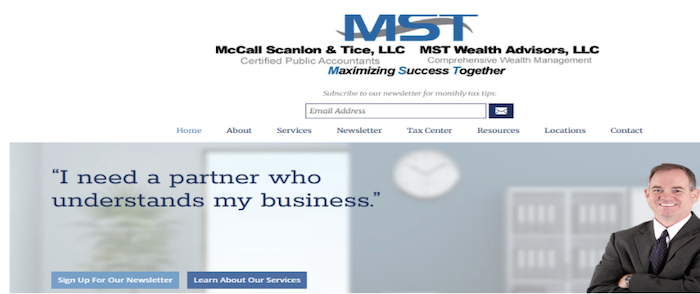
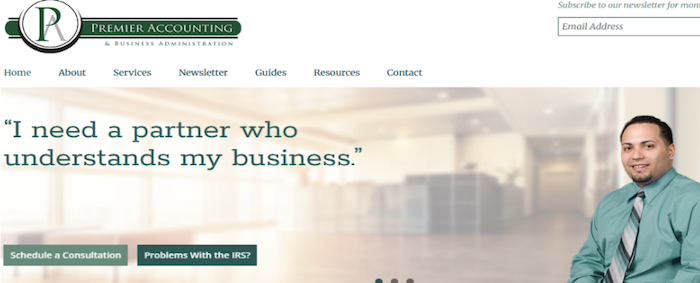
A lack of originality can subtly erode trust—especially for higher-value clients who expect professionalism and a strong, unique brand presence. Below are tag lines that CPA Site Solutions templates are using over and over. Also notice how similar the top navigation is.

3. SEO Dilution and Ranking Challenges
Search engines are designed to prioritize unique, high-quality content. When your website closely resembles others—especially in structure and written content—you face several SEO challenges:
-
Reduced ability to rank for competitive keywords
-
Lower visibility in local search results
-
Increased likelihood of being filtered out as redundant content
Even if your site is technically optimized, similarity to other sites weakens its authority. Over time, this makes it significantly harder to generate organic traffic.
4. Poor Performance in AI-Driven Search
AI-powered search platforms are increasingly shaping how users discover service providers. These systems prioritize firms that demonstrate:
-
Clear expertise
-
Original insights
-
Distinct positioning
Nearly identical websites fail on all three fronts. If your content doesn't stand out, AI tools are less likely to feature your firm in summaries, recommendations, or voice search results.
5. Weak First Impressions
Your website has seconds to capture attention. If a visitor has already seen the same layout and messaging on another firm's site, your impact is immediately diminished.
Instead of thinking, "This firm looks like a great fit," the reaction becomes:
-
"I've seen this before"
-
"Nothing special here"
That moment of indifference is often enough to send prospects elsewhere.
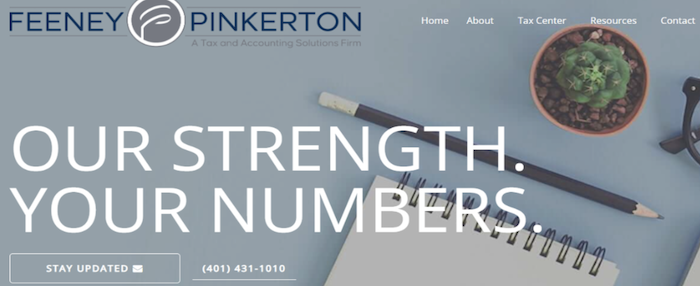
To illustrate the point, here are examples of CPA Site Solutions using templates to create the wrong first impression, Our Strength Your Numbers. If this was a college submission, this would called plagiarism. In business, Google calls it duplicate content and will only show the first website and hide the repeat offenders.




The Real Risk: Becoming Invisible
The greatest danger of a nearly identical website isn't that it looks bad—it's that it makes your firm invisible. Invisible in search results (Google won't show it). Invisible in the minds of prospects. Invisible in a crowded, competitive marketplace.
In an industry built on trust and expertise, blending in is the fastest way to be overlooked.
Final Thought
Your website should be a strategic asset that sets you apart—not a generic placeholder that makes you look like everyone else. The more competitive your market becomes, the more important it is to clearly differentiate.
Because if your website doesn't give prospects a reason to choose you, they'll find someone else's that does.