



Why Templated Accounting Websites Hurt Your Firm More Than You Think
| |
In today's competitive accounting landscape, your website is often the first impression a prospective client has of your firm.
Yet many accountants rely on templated website platforms that produce nearly identical designs across hundreds sometimes thousands of firms. While these solutions may seem convenient and cost-effective, having the same website as your competitor down the street can quietly undermine your growth in several critical ways.
1. You Become Instantly Forgettable
When prospects visit multiple accounting firm websites and see the same layout, stock images, and generic messaging repeated over and over, nothing stands out. Your firm blends into a sea of sameness. Even if your services are superior, your website fails to communicate that distinction.
In contrast, firms with customized websites create a memorable experience. Unique branding, tailored messaging, and clear positioning help prospects remember who you are and more importantly, why they should choose you.
2. Your Value Proposition Gets Lost
Templated websites are built for mass appeal, not differentiation. They typically rely on broad, generic language like trusted advisors, full-service accounting, or personalized solutions. The problem? Every other firm using the same template says the exact same thing.
Without a clearly defined and unique value proposition, prospects default to comparing firms on price or convenience two areas where you don't want to compete. A customized website allows you to highlight your niche expertise, ideal client profile, and specific outcomes you deliver.
3. SEO Performance Is Severely Limited
Search engine optimization (SEO) is one of the biggest hidden drawbacks of templated websites. When multiple firms share similar site structures, content blocks, and even identical wording, search engines struggle to differentiate between them.
This leads to:
- Lower rankings in local search results
- Reduced visibility in competitive markets
- Difficulty appearing in AI-driven search summaries
Google and other search platforms prioritize originality, authority, and relevance. If your site looks like a duplicate of dozens of others, it's unlikely to rank well, especially against firms investing in custom content and local SEO strategies.
4. Weak Local Market Positioning
For most accounting firms, success depends on dominating a specific geographic market. Templated websites often fail to incorporate strong local signals ”such as location-specific content, community involvement, or targeted service pages.
If your competitor across town is using the same template but has stronger reviews, more localized content, or better SEO optimization, they will consistently outrank and outperform you online.
A custom website strategy allows you to build location authority, making your firm the obvious choice in your market.
5. Poor Conversion Rates
Even if templated websites generate traffic, they often fail to convert visitors into leads. Why? Because they are not designed with your specific audience in mind.
Common issues include:
- Generic calls-to-action
- Lack of trust-building elements (case studies, testimonials, credentials)
- No clear client journey or funnel
- Overly broad service pages
A high-performing accounting website should guide a visitor toward taking action whether that's scheduling a consultation, downloading a resource, or making contact. Templates rarely provide that level of strategic design.
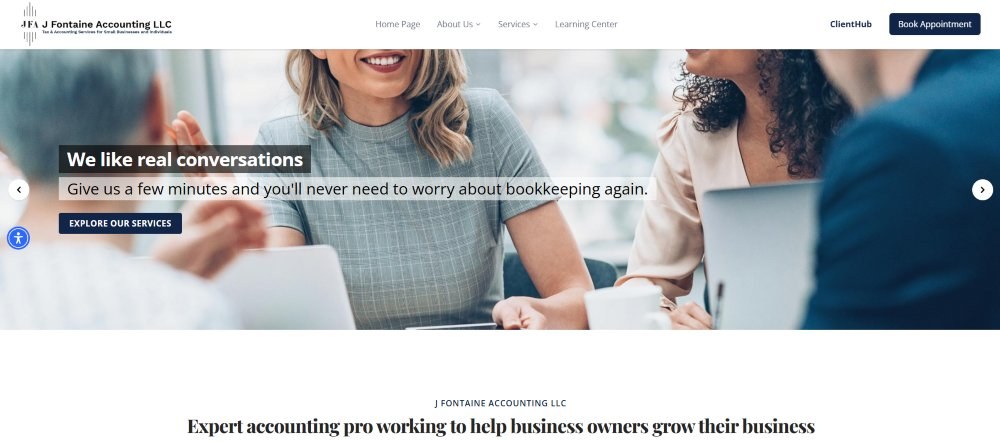
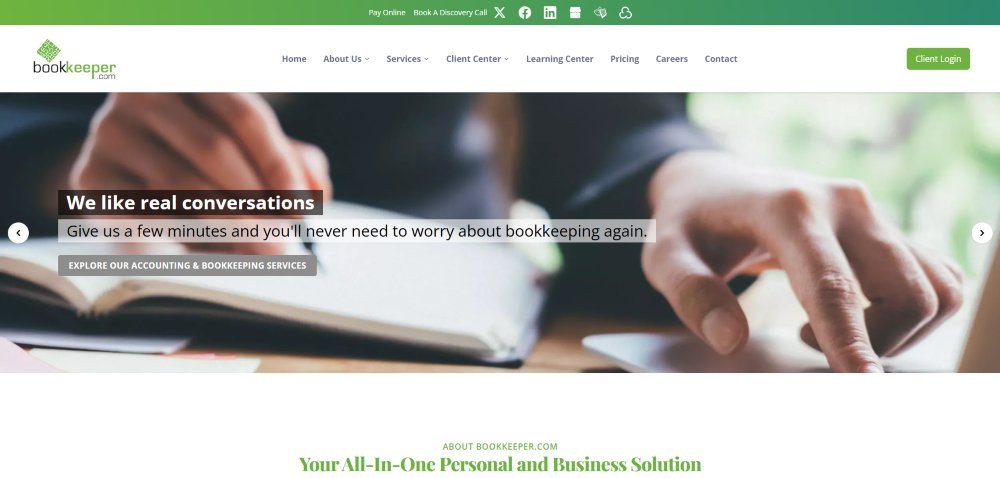
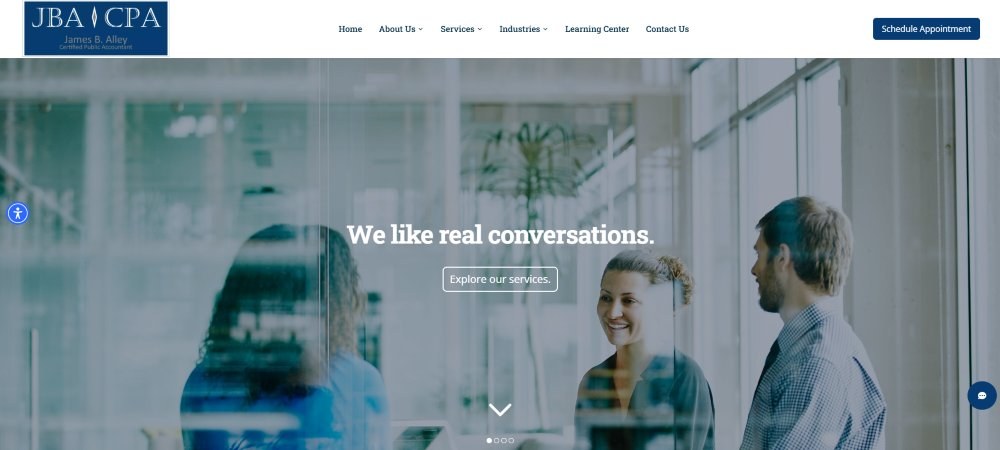
Below is an example from CountingWorks PRO who is using nearly identical website navigation and generic taglines, We Like Real Conversations.
The Bottom Line
Templated accounting websites may offer a quick and inexpensive way to get online, but they come at a significant long-term cost. When your website looks and sounds like your competitors, you lose the ability to differentiate, rank effectively in search, and convert visitors into clients.
Firms that invest in custom website strategies built around their niche, market, and ideal clients consistently outperform those relying on cookie-cutter solutions.
In a profession where trust, expertise, and credibility are everything, your website should reflect what makes your firm different not what makes it the same.